

















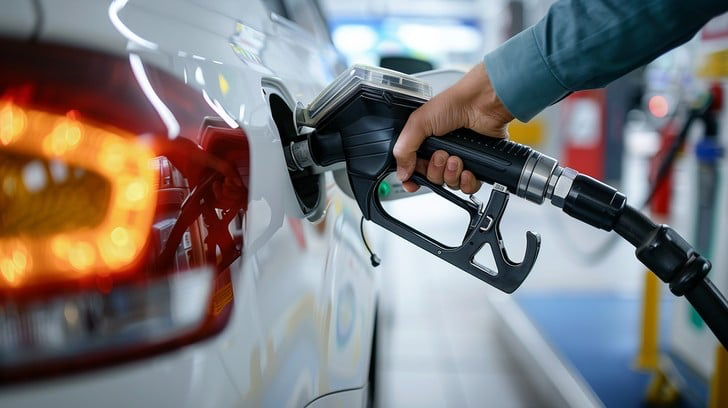
At many points of our life, we begin to operate as if we are machines. Ones that run indefinitely off of gasoline, like a car with a full gas tank and low mileage.
But what happens when we run out of gas? What happens when we’ve been refueling over an extended period of time, but hit a poor efficiency level due to high mileage wear in our mechanical components?
The truth of the matter is simply that we are not machines. We are humans, and humans can run efficiently until we can’t anymore. Until we hit that barrier that is separating us from the goals we wish to achieve. Until we hit a point of destruction within our own walls and spiral into a sequence of self-destruction.
So, how do we avoid this “maximum”? How do we preserve ourselves as much as possible without harming ourselves with extreme amounts of overwhelming stress? The simple answer is balance between each and every difficult task you encounter. Of course, it is much easier said than done, and living a “stress-free” lifestyle is essentially impossible, but certainly possible to adapt and work towards one. In order to balance the amount of stress you intake with the relaxation “quantities” you receive, you must take a break. Having a work-life balance in your lifestyle is the key to consistency and success.
For some, taking a break may seem like a “waste of time”, or a distraction of your goal to accomplish a task or assignment. For others, taking a break may seem like the best possible option to take in any stressful situation that may seem challenging. However, neither perspective truly defines a valid solution for stress management. According to many informational outlets such as timely.com and Michigan State University, taking a break can increase focus when employees return to work, and lower the likelihood of stress-related health issues. Taking a break is absolutely necessary when working for long periods of time, and being a high school senior myself, I can definitely say that this is very much true. Without taking mental breaks, I would have not gotten very far in high school entirely, as breaks prevent “burnout” and relieve stress build ups. Taking work-life balance into consideration, too many breaks can also be bad for your mentality and aspirations to “keep going”. At many times, especially for high school students, we tend to procrastinate on assignments or tasks until the last second, and can very easily get distracted by the things around us, such as our cellphones or other electronic devices. If you take too many breaks, it will get to a point of pushing things off until you can’t anymore, ultimately building up more stress as you’re rushing to complete a task one hour before the deadline.
Similarly from my personal experiences as a student who deals with both ends of the situation, I knew I couldn’t be the only student that may feel the same way. I asked a few of my classmates about how they felt about the importance of a work-life balance principle, and their responses were unsurprisingly similar.
“I try to [take a break] within my homework/study schedule to have a break in between where I can go and get a snack, or maybe five minutes on Tiktok because it’s sometimes too much.” says senior Daniela Perez, an academically-motivated student.
“I think prioritizing relaxation should be encouraged more, and yes, I do think the balance I’ve constructed plays a big role in my mentality” says senior Nathan Hillman, also an academically-motivated student.
This principle doesn’t only apply to students who constantly face academic challenges. It is a universal aspect of many people’s lives, and if it is not dealt with in an appropriate manner or approach, it can truly be devastating to your quality of life. Take a break. But don’t take too much of a break. You deserve a little bit of time to yourself and spend it doing something besides the draining assignments that are due by the Monday of the following week. Refresh your mind and stay focused on your end goals, but don’t wait until the last minute to do so.
Just as a smartphone is capable of doing, recharge your battery and continue to stay consistent once you’re at 100%.